Rigid-Flex PCB consumer electronics PCB
Rigid-Flex PCBs
1. Introduction: The Emergence and Value of Rigid-Flex PCBs
Amid the trend of electronic devices moving toward miniaturization, lightweight, and multi-functionality, the limitations of traditional rigid PCBs and flexible FPCs have become increasingly prominent. Rigid PCBs cannot adapt to complex spatial layouts and dynamic bending requirements, while flexible FPCs, despite their flexibility, lack sufficient component-carrying capacity and mechanical stability. Rigid-Flex PCBs were developed to address this contradiction. By integrating the structural stability of rigid PCBs with the spatial adaptability of flexible FPCs, they have become a key technology for achieving complex interconnections in high-end electronic devices.
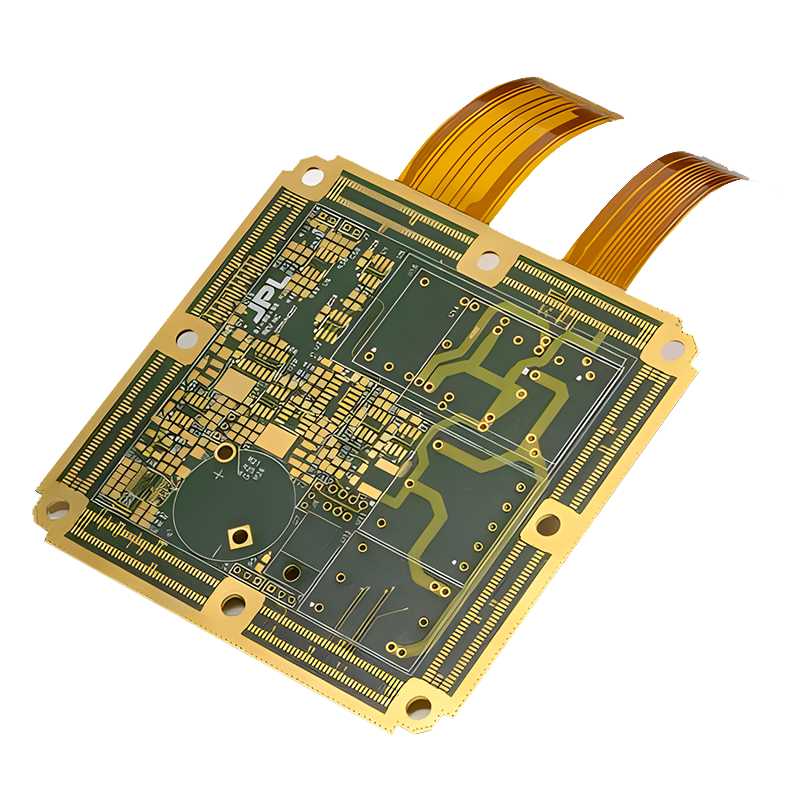
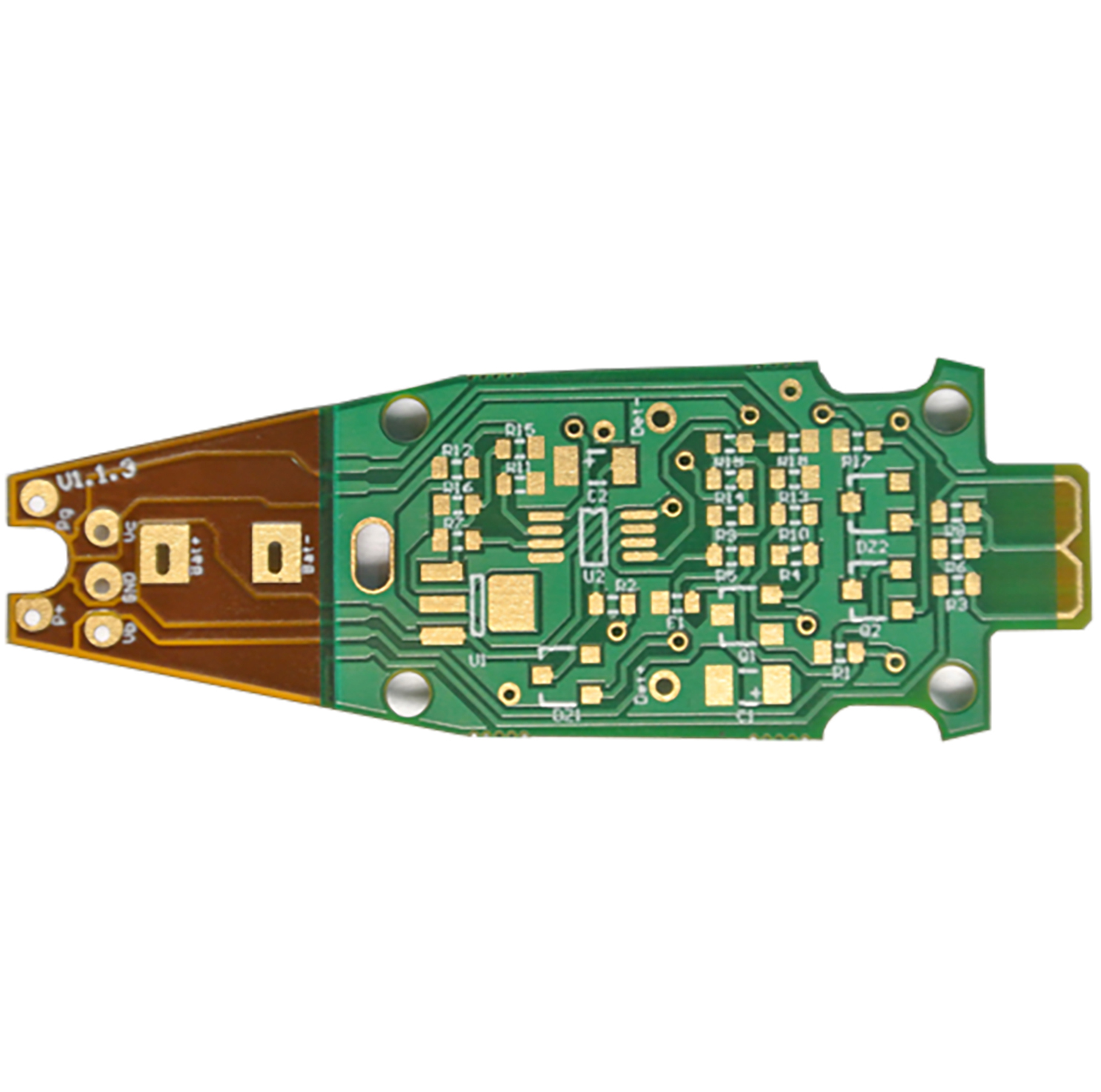
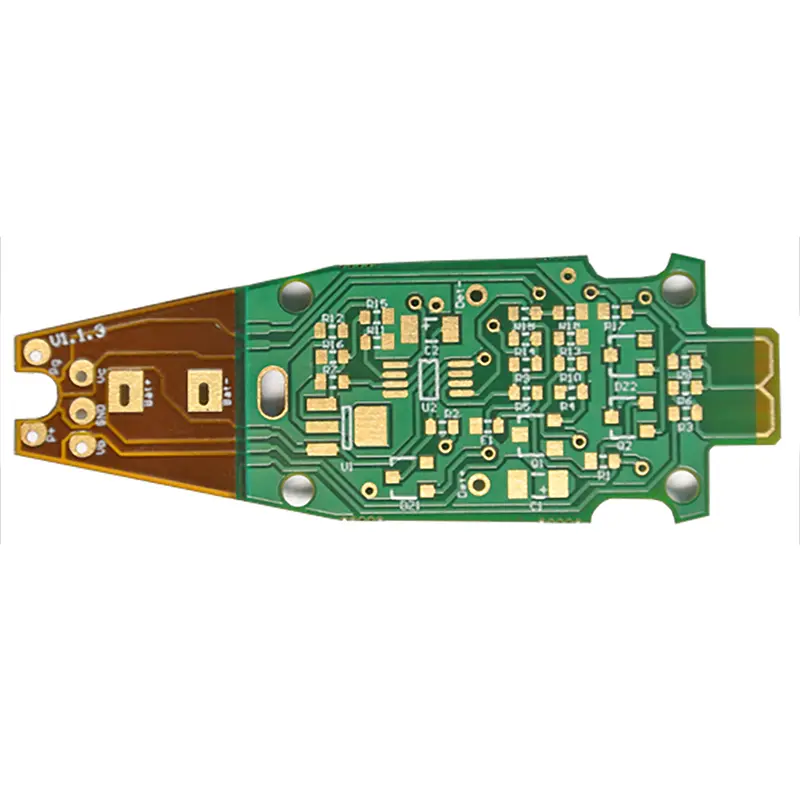
Rigid-Flex PCBs integrate rigid and flexible regions within a single circuit board. They not only provide the rigid support required for component soldering but also enable bending and folding connections between different internal modules of a device. This significantly reduces the use of connectors and wiring harnesses, lowering assembly complexity and failure risks. Today, they are widely used in consumer electronics, automotive electronics, aerospace, medical devices, and other fields, driving innovation and upgrading in electronic product design.
2. Structural Composition and Core Characteristics of Rigid-Flex PCBs
Structural Composition
The structure of a Rigid-Flex PCB is an organic integration of rigid and flexible parts, mainly composed of the following core components:
- Rigid Regions: Made of traditional rigid PCB substrates, such as FR-4 epoxy glass cloth substrates, with a thickness typically ranging from 0.4 to 2.0mm. This region serves as the main carrier for components (e.g., chips, connectors, resistors, capacitors), providing stable mechanical support and good heat dissipation performance.
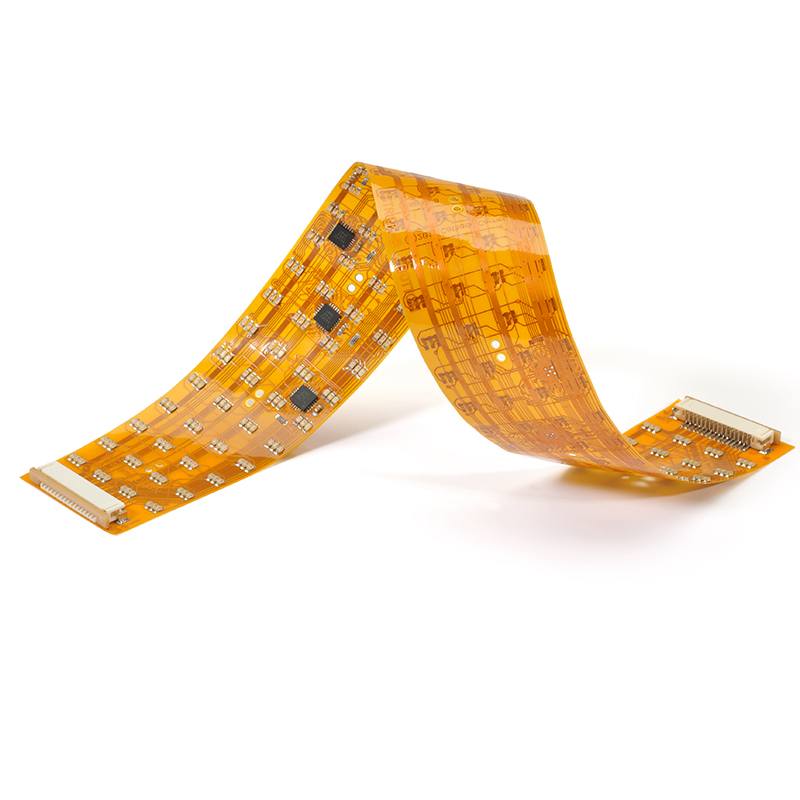
- Flexible Regions: Using polyimide (PI) as the core substrate, with a thickness generally between 0.1 and 0.3mm. Copper is coated on the surface to form conductive traces. Flexible regions can be repeatedly bent, folded, or twisted, acting as a "bridge" connecting different rigid regions. Their bending radius can usually reach 5-10 times their own thickness (depending on materials and design).
- Transition Regions: The connection part between rigid and flexible regions. A gradient transition structure must be adopted in the design to avoid fracture caused by stress concentration. The copper foil in the transition region is usually reinforced, such as adding a cover layer or using a special etching process.
- Conductive Interconnection Layers: Metallized through-holes (PTH) are used to achieve electrical connections between rigid and flexible regions, as well as between different layers. The design of through-holes must consider the bending characteristics of flexible regions to prevent through-hole cracking from affecting conductivity.
- Protective Layers: Solder mask (green oil) is used to protect rigid regions; flexible regions use polyimide coverlay or flexible solder mask to prevent trace oxidation and mechanical damage while maintaining flexibility.
Core Characteristics
Structural Compatibility: It can both carry components and adapt to complex spatial layouts, enabling 3D stereo routing and significantly improving the space utilization inside the device.
Enhanced Reliability: Reducing the use of connectors and wiring harnesses lowers the risks of plug-in wear and poor contact. Meanwhile, the anti-vibration and anti-impact performance of flexible regions is superior to traditional wiring harnesses.
Lightweight and Miniaturization: Compared with the combination of "rigid PCB + connectors + wiring harnesses", the overall thickness and weight can be reduced by 30%-50%, meeting the requirements of portable devices and precision instruments.
Design Flexibility: The shape, position, and quantity of rigid and flexible regions can be customized according to the device structure, providing more possibilities for product design.
3. Classification of Rigid-Flex PCBs
Based on structural complexity, number of layers, and characteristics of flexible regions, Rigid-Flex PCBs can be mainly classified into the following types:
Classification by Number of Layers
- Double-Layer Rigid-Flex PCBs: Composed of two conductive layers (top and bottom). The rigid regions use FR-4 substrates, and the flexible regions use PI substrates. With a relatively simple structure and low cost, they are suitable for medium-low power, simple interconnection scenarios, such as mobile phone camera modules and small sensors.
- Multi-Layer Rigid-Flex PCBs: Contain 3 or more conductive layers, with rigid and flexible substrates alternately combined through lamination. They can realize complex signal routing and power distribution, suitable for high-end electronic devices such as laptops and aerospace electronic components. The number of layers is usually 4-12, and can reach more than 20 in special scenarios.
Classification by Characteristics of Flexible Regions
- Single-Segment Flexible Rigid-Flex PCBs: Contain only one flexible segment connecting two rigid regions, such as the circuit board connecting the dial and strap sensor in smart watches.
- Multi-Segment Flexible Rigid-Flex PCBs: Contain multiple flexible segments, enabling complex connections between multiple rigid regions, such as the multi-layer rigid-flex PCB connecting the screen, motherboard, and battery in foldable phones.
- Foldable Rigid-Flex PCBs: The flexible regions are specially designed to withstand thousands of folds without damage, serving as core components in foldable screen phones and wearable devices.
4. Manufacturing Process of Rigid-Flex PCBs
The manufacturing process of Rigid-Flex PCBs integrates the process characteristics of rigid PCBs and flexible FPCs, with a more complex flow. The key steps include:
- Substrate Preparation: Prepare rigid substrates (FR-4) and flexible substrates (PI) separately, and cut them into corresponding sizes according to design requirements. Flexible substrates need surface cleaning and roughening treatment to enhance the bonding force with adhesives.
- Inner Layer Fabrication: Perform photolithography and etching on the inner copper foil of rigid and flexible substrates to form inner conductive patterns. A temporary support film must be attached to the surface of flexible inner layers to prevent deformation during subsequent processing.
- Lamination Assembly: Alternately stack rigid substrates, flexible substrates, and prepreg (PP) according to the designed lamination structure, and place them in a laminator for pressing under high temperature and pressure. The pressing process requires precise control of temperature (180-220℃), pressure (20-40kg/cm²), and time (60-90min) to ensure tight bonding of all layers without damaging the flexible regions.
- Drilling and Metallization: Use laser or mechanical drilling equipment to drill through-holes in the circuit board, then metallize the through-holes through electroless copper plating and electrolytic copper plating to achieve electrical connections between layers. Through-holes in flexible regions need reinforcement, such as resin filling or adding copper rings.
- Outer Layer Fabrication: Apply photoresist on the outer copper foil, then perform exposure, development, and etching to form outer conductive patterns, followed by removing the photoresist.
- Protective Layer Coating: Apply solder mask on rigid regions and cure it; attach polyimide coverlay or apply flexible solder mask on flexible regions, and achieve bonding through hot pressing or UV curing.
- Shape Processing: Use CNC punching or laser cutting equipment to process the circuit board into the desired shape, separate rigid and flexible regions, and polish the edges.
- Testing and Inspection: Conduct electrical performance tests (such as continuity, insulation, and impedance tests) and mechanical performance tests (such as bending life test of flexible regions), and check for circuit defects and appearance quality through AOI (Automated Optical Inspection).
5. Application Fields of Rigid-Flex PCBs
With their unique structural advantages, Rigid-Flex PCBs are widely used in various high-end fields:
Consumer Electronics
It is the largest application market for Rigid-Flex PCBs. In foldable screen phones, they connect the inner screen, outer screen, motherboard, and battery to realize signal transmission when the screen is folded; in laptops, they are used to connect the keyboard, touchpad, and motherboard, reducing internal wiring harnesses; in smart watches and VR/AR devices, their lightweight and flexible characteristics can adapt to the compact space and human body fitting needs of wearable devices.
Automotive Electronics
The intelligence and electrification of automobiles have promoted the application of Rigid-Flex PCBs. In in-vehicle infotainment systems, they connect displays, audio systems, and control modules; in autonomous driving sensors (such as lidar and cameras), they realize complex signal interconnections; in electric vehicle battery management systems (BMS), they can adapt to the irregular shape of battery packs, improving space utilization and heat dissipation performance. Their anti-vibration characteristics can also meet the mechanical environment requirements during vehicle operation.
Aerospace and Defense
In the aerospace field, Rigid-Flex PCBs are favored for their lightweight, high reliability, and resistance to harsh environments. They are used in aircraft avionics systems (such as navigators and communication equipment), satellite payload modules, and missile guidance systems. They can realize complex circuit connections in limited space while withstanding extreme temperatures (-55℃ to 125℃), vibration, and radiation environments.
Medical Devices
In medical devices, the application of Rigid-Flex PCBs is mainly concentrated in portable and implantable devices. For example, in ultrasound probes, they can fit the curved structure of the probe to realize multi-channel signal transmission; in implantable devices such as insulin pumps and pacemakers, their biocompatibility (using medical-grade PI substrates) and miniaturization characteristics meet the requirements for in-vivo use.
Industrial and IoT
In industrial robots, Rigid-Flex PCBs are used to connect sensors and controllers on robotic arms to adapt to the flexible movement of the arms; in IoT smart sensor nodes, their miniaturization and low-power design can improve the deployment flexibility and battery life of sensors.
Interested?
Let us know more about your project.
REQUEST A QUOTE

PCB
FPC
Rigid-Flex
FR-4
HDI PCB
Rogers High-Frequency Board
PTFE Teflon High-Frequency Board
Aluminum
Copper Core
PCB Assembly
LED light PCBA
Memory PCBA
Power Supply PCBA
New Energey PCBA
Communication PCBA
Industrial Control PCBA
Medical Equipment PCBA
PCBA Testing Service
Certification Application
RoHS Certification Application

REACH Certification Application

CE Certification Application

FCC Certification Application

CQC Certification Application

UL Certification Application
Transformers, Inductors
High Frequency Transformers
Low Frequency Transformers
High Power Transformers
Conversion Transformers
Sealed Transformers
Ring Transformers
Inductors
Wires,Cables Customized
Network Cables
Power Cords
Antenna Cables
Coaxial Cables
Net Position Indicator
Solar AIS net position indicator
Capacitors
Connectors
Diodes
Embedded Processors & Controllers
Digital Signal Processors (DSP/DSC)
Microcontrollers (MCU/MPU/SOC)
Programmable Logic Device(CPLD/FPGA)
Communication Modules/IoT
Resistors
Through Hole Resistors
Resistor Networks, Arrays
Potentiometers,Variable Resistors
Aluminum Case,Porcelain Tube Resistance
Current Sense Resistors,Shunt Resistors
Switches
Transistors
Power Modules
Isolated Power Modules
DC-AC Module(Inverter)
RF and Wireless